
Overview
About Kerid Crater
A volcanic basin and groundwater
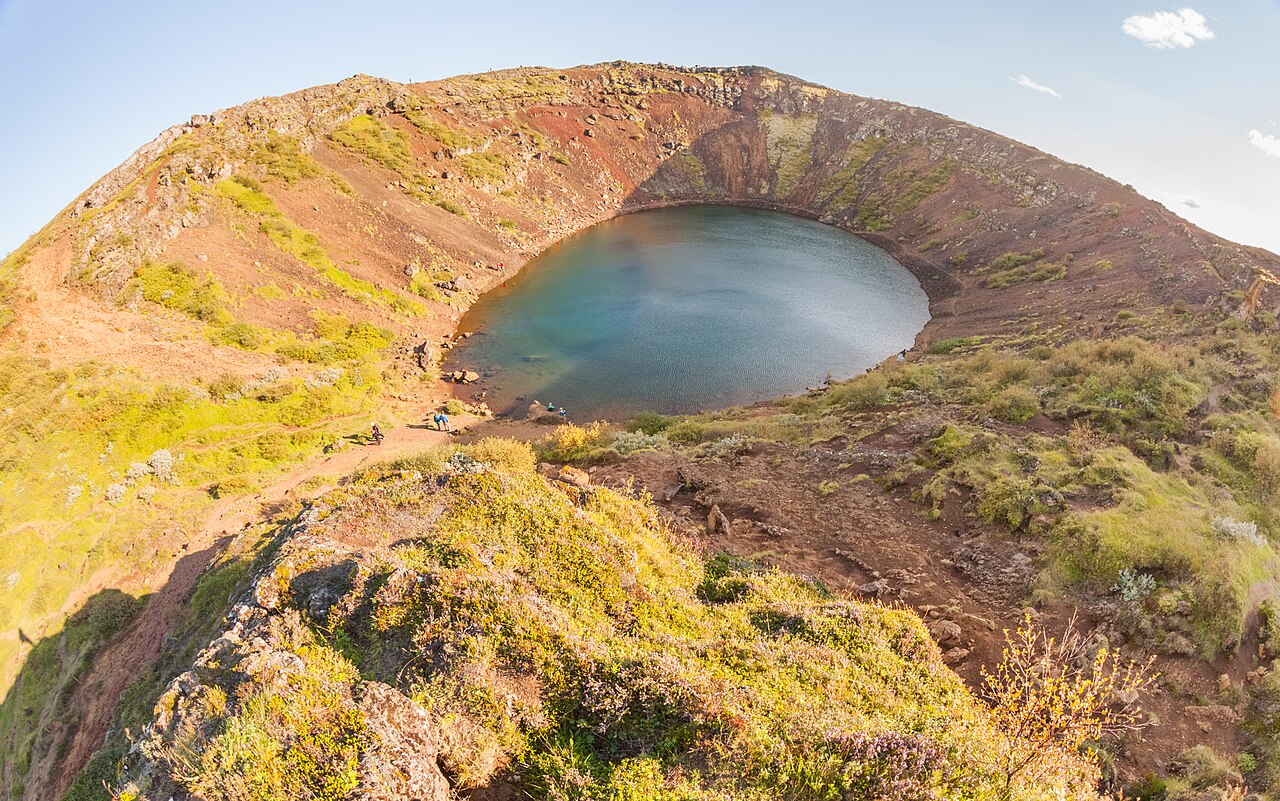
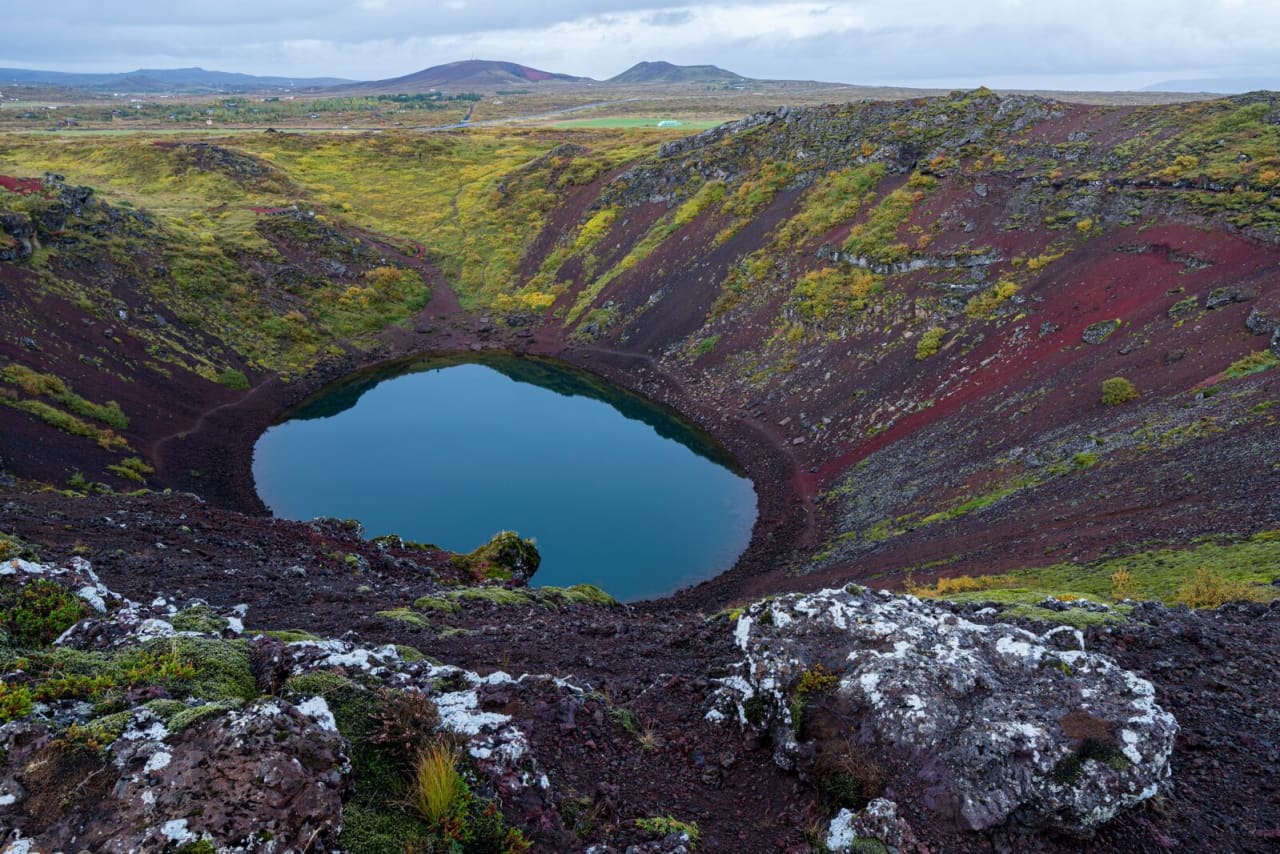
The site's geological interpretation describes collapse following an eruption that drained magma from a volcanic cone. The resulting depression is approximately fifty-five metres deep, with an elongated outline. Water in the bottom tracks the surrounding groundwater table. Consequently, the lake's level and depth can vary; they are not fixed dimensions of the crater itself.
A history of lake research
German researchers investigated the lake in 1932 using a rubber boat and nets. Naturalist Geir Gígja conducted further studies between 1941 and 1954, assisted by local farmers. His measurements recorded substantial water-level variation, with a difference of 4.8 metres between the highest and lowest observations. These records provide a historical picture rather than a measurement of today's lake.
Life within the crater
The investigations documented sticklebacks, plankton and small crustaceans, together with bottom-dwelling organisms such as midge larvae, worms and freshwater molluscs. Kerið is therefore also a freshwater habitat. Its biological record shows that a visually stark volcanic basin can support a varied community beneath the water's surface.
Article reviewed .