Overview
About Icelandic Sheep
A varied local breed
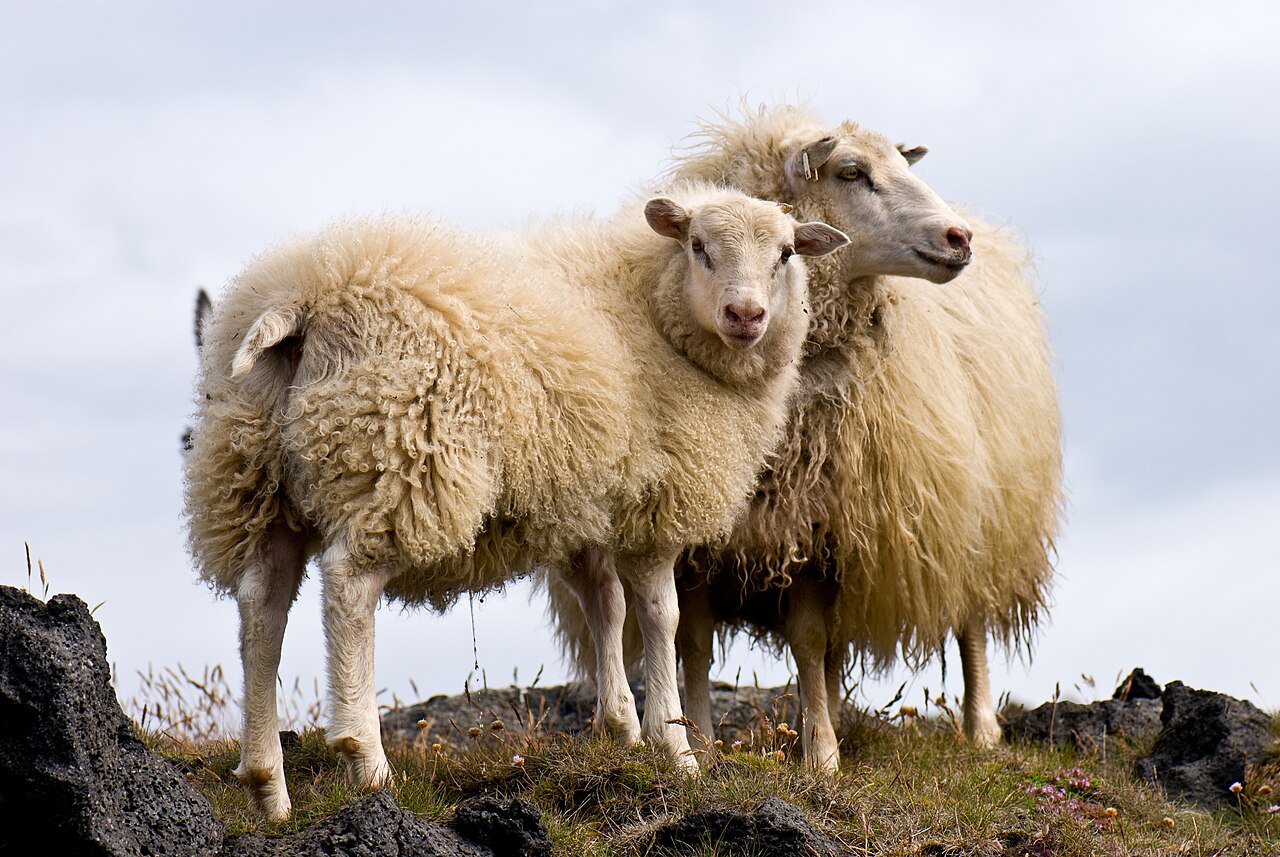
The breed includes both horned and naturally hornless animals. White sheep predominate, but black, grey and brown colours also occur. Selection has focused on useful performance traits rather than a single uniform appearance. Organised breeding developed in the early twentieth century, with records subsequently supporting selection for fertility, growth, milk production and other agricultural characteristics.
The seasonal grazing cycle
Lambing is followed by summer grazing, often on extensive upland pastures. In autumn, farmers and helpers gather the animals for réttir, the communal roundup and sorting of sheep. This annual work connects livestock husbandry with local cooperation and inherited knowledge of grazing land.
The distinct leader sheep
Forystufé, or leader sheep, have traditionally been valued for guiding flocks through difficult terrain. NordGen records their recognition as a separate breed in 2017 because of distinctive behaviour and genetics. They share ancestry with ordinary Icelandic sheep but represent a particular animal genetic resource whose conservation requires separate attention.
Article reviewed .