Overview
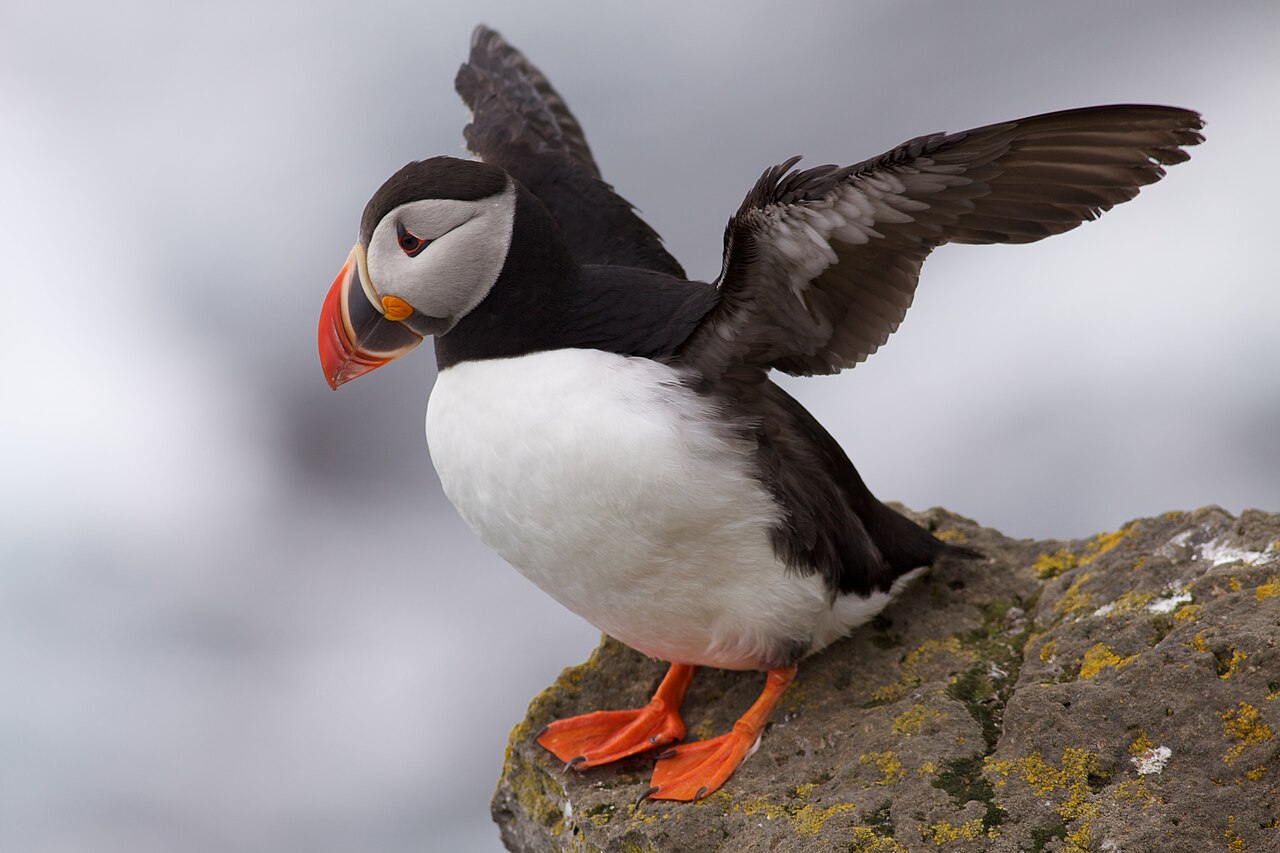
About Atlantic Puffin
A seabird adapted to two environments
Puffins spend much of their lives at sea and come ashore to breed. Underwater they use their wings for propulsion while pursuing small fish. On land, breeding pairs excavate burrows with their bills and feet, although rocky sites may provide crevices instead. Pairs commonly return to the same burrow in successive breeding seasons.
Raising a single chick
A normal clutch contains one egg, making the success of each nesting attempt important. Adults bring small fish to the nest. Research by the South Iceland Nature Research Centre across twelve Icelandic colonies during 2011–2021 documented sandeels, capelin and other prey in chick food loads, revealing differences among regions and years.
Food supply and breeding success
Puffin conservation depends on conditions at sea as well as protection of nesting ground. Icelandic monitoring has linked poor food availability with reduced breeding participation and nesting success. Researchers inspect marked burrows using infrared video probes, allowing repeated observations of eggs, chicks and breeding outcomes without relying solely on counts of visible adults.
Article reviewed .