Overview
About Arctic Fox
Two coat forms
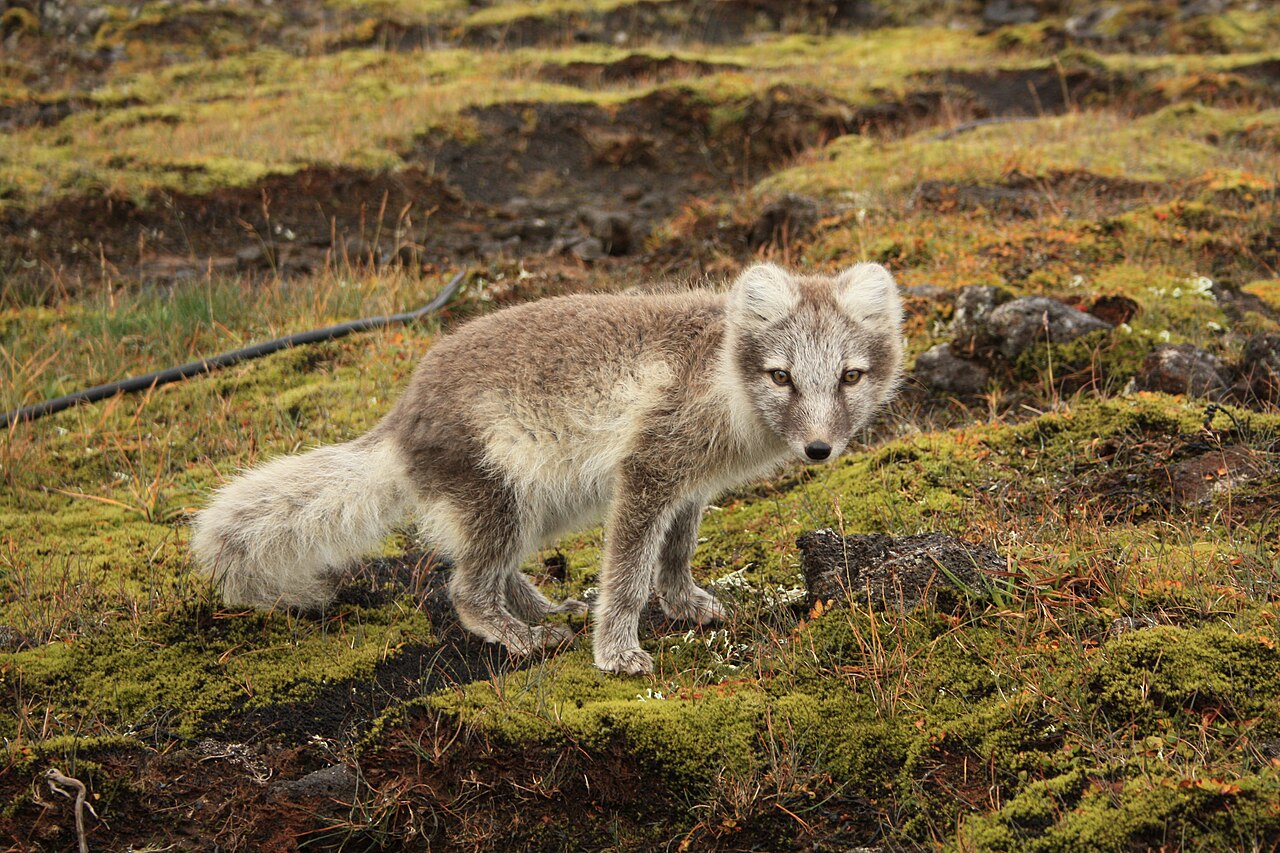
Icelandic foxes occur in white and dark, often called blue, colour forms. White foxes become nearly white in winter and develop a brown-grey back with a pale underside in summer. Dark foxes remain dark throughout the year. A dense winter coat, compact body, short limbs and small rounded ears help reduce heat loss.
An Icelandic diet
Birds are important prey, but foxes also consume eggs, carrion, berries and other available food. Coastal animals can exploit seabirds and material washed ashore. They bury surplus food and build autumn fat reserves for winter. Iceland lacks the lemming populations that drive pronounced feeding and breeding cycles in some other Arctic fox populations.
Territories and family life
Breeding pairs defend a territory and both parents bring food to their growing young. Pups are generally born around May after a pregnancy of roughly two months. Long-running monitoring in Hornstrandir and studies of foxes from elsewhere in Iceland help researchers understand reproduction, diet and the relationship between people and this native predator.
Article reviewed .