Northern Lights
Northern Lights in Iceland: plan for the sky you actually have
Plan an Iceland Northern Lights outing: darkness, cloud forecasts, realistic expectations, clothing and how to compare guided aurora tours.
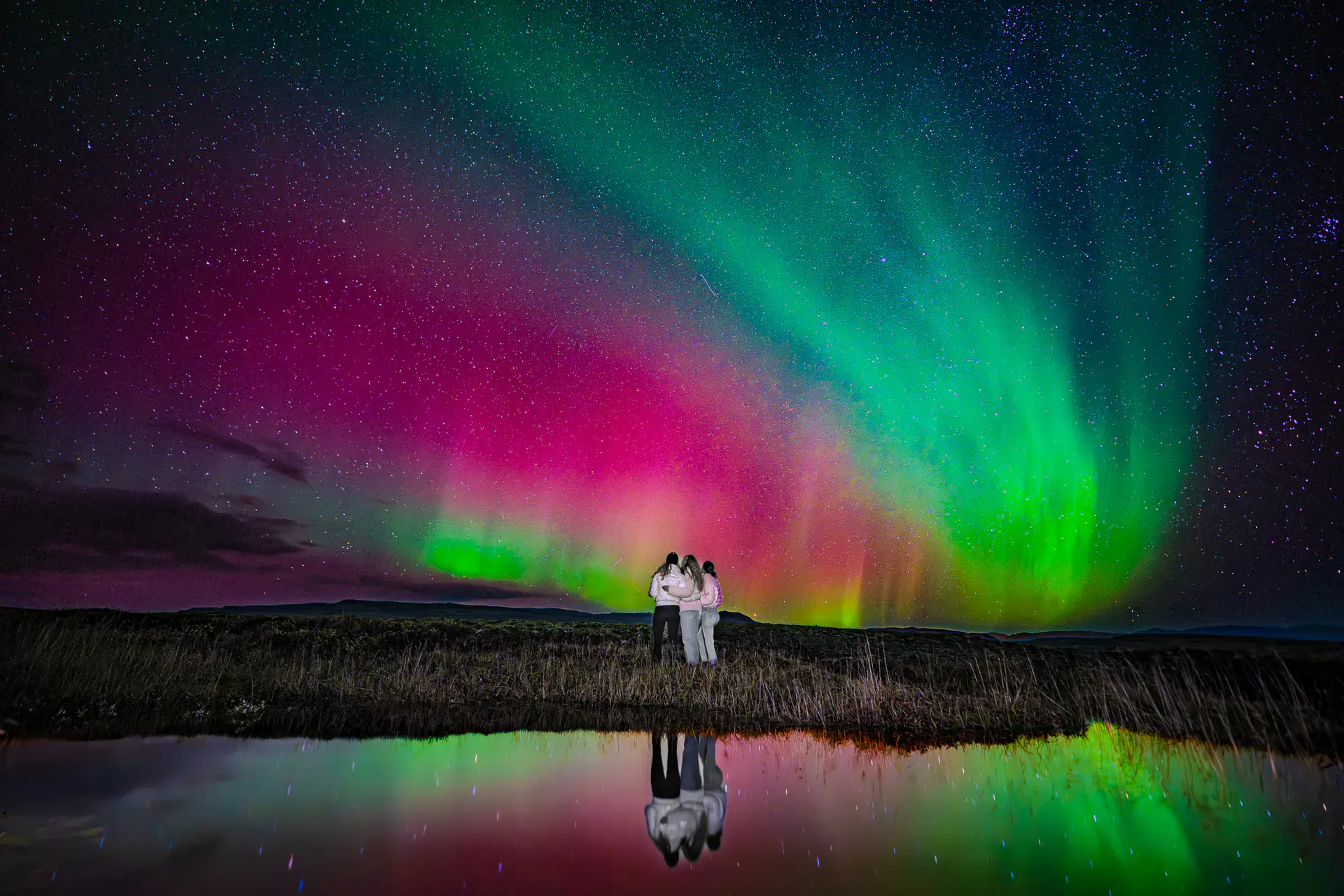
 Photo from Norse Adventures
An aurora evening rarely follows a neat script. You watch, wait, move if the plan calls for it, and try again. Useful preparation means understanding what can be planned, what can only be forecast, and what no operator can promise.
You need darkness, a sufficiently clear sky and auroral activity. Read cloud cover alongside the activity forecast rather than choosing an evening by one number. Leave more than one opportunity where possible; a sighting is a possibility, not an inclusion you have purchased.
- Start with
- Darkness and cloud cover
- Forecast
- Guidance, not a guarantee
- Your evening
- Warm layers and flexibility
Choose dates for the whole holiday
Norse’s local guide describes a broad viewing season from late August into April, with less darkness at the edges. Treat that as a planning window, not a promise for a particular night.
Would you still enjoy the trip if the lights never appeared? Choose daytime places and experiences you want to visit, and leave several suitable evenings available if the aurora is a priority. A satisfying holiday should not depend on one brief event.
Read the cloud map before chasing a number
The Icelandic Meteorological Office’s aurora page combines cloud-cover and activity forecasts. Green shades on its map indicate cloud; clearer areas are white. Read the time and legend before drawing conclusions about your evening.
Kp describes geomagnetic activity at a broad scale. It cannot tell you an exact stop will have clear skies or a visible display when you arrive. Consider clouds, darkness and changing observations together, and recheck before departure instead of relying on a morning screenshot.
What can a guided outing provide?
A guide can organise the evening, interpret conditions and make decisions about the route. That may be valuable if you would rather watch the sky than manage unfamiliar logistics. What is offered depends on the operator’s itinerary and terms.
Check group size, duration, pickup, photography and the policy when conditions are unsuitable. A retry, if offered, is not automatically a refund or a guaranteed second place. Read its conditions and check whether another evening fits your travel dates.
- What determines whether the outing operates?
- How are cancellations or changes communicated?
- Are photographs included, and how are they delivered?
- What happens after an outing without a sighting?
Dress for waiting
Plan for standing outside, not only sitting in a warm vehicle. Try your insulation beneath your outer layer before leaving home. Warm hands also make a phone or camera easier to manage.
Organise gloves, charged batteries, medication and personal essentials before the evening begins. Follow the operator’s clothing guidance and check the weather. Paying for an outing does not remove the need to prepare for the conditions.
Let the photograph support the evening
Find your device’s night settings, practise keeping it steady, and learn to reduce its brightness before leaving your accommodation. Those tasks are less enjoyable with cold fingers outside.
If photography matters to you, ask what assistance is available and what equipment to bring. Leave room to put the camera away, too. An evening spent adjusting settings can become one you remember mostly through a screen.
Common questions
Does a high forecast guarantee a sighting?
No. Darkness, clouds, location and actual activity all affect what you see. A forecast is guidance rather than a guarantee.
Should I book my final night?
Consider an earlier suitable evening if you want flexibility. Check any retry policy against your remaining dates.
Do I need a tour?
Not everyone does. A guided outing helps with organisation and interpretation; independent viewing means making your own travel, access and safety decisions.