Overview
About Krafla
Caldera and fissure landscape
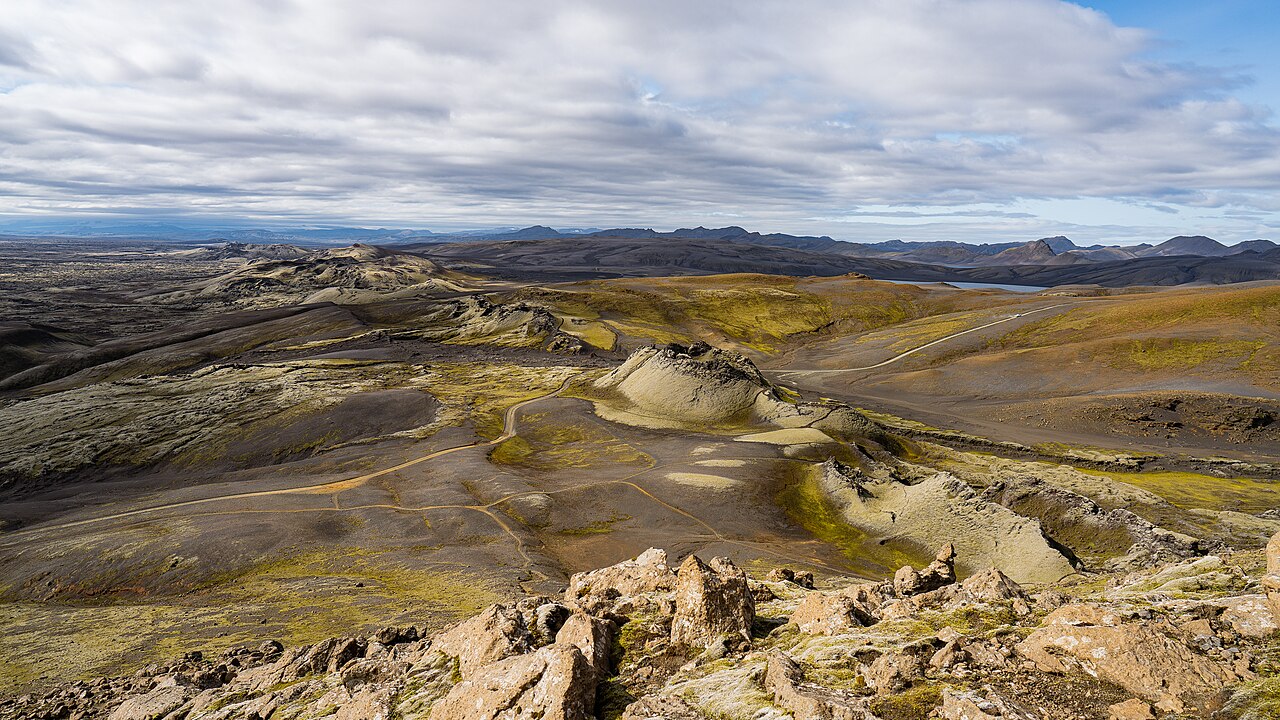
An old caldera filled with volcanic deposits is cut by a roughly north-northeast-trending graben, a strip of land lowered between faults. Geothermal activity follows parts of this fractured landscape. Steam vents, mud pools, altered rock and sulphur deposits mark places where heat and fluids reach the surface, including the area around Leirhnjúkur.
Two episodes of volcanic fires
The Mývatn Fires began with the explosive formation of Víti in 1724 and included lava eruptions later in that decade. The Krafla Fires of 1975–1984 combined earthquakes, repeated underground magma intrusions and surface eruptions. Much of the magma movement remained underground, demonstrating that volcanic unrest does not always culminate in an eruption at the surface.
Geothermal electricity
Construction of the Krafla power station coincided with the later volcanic episode. Electricity generation began in 1978. The station connects this active volcanic setting with Iceland's use of geothermal heat as an energy resource.
Article reviewed .