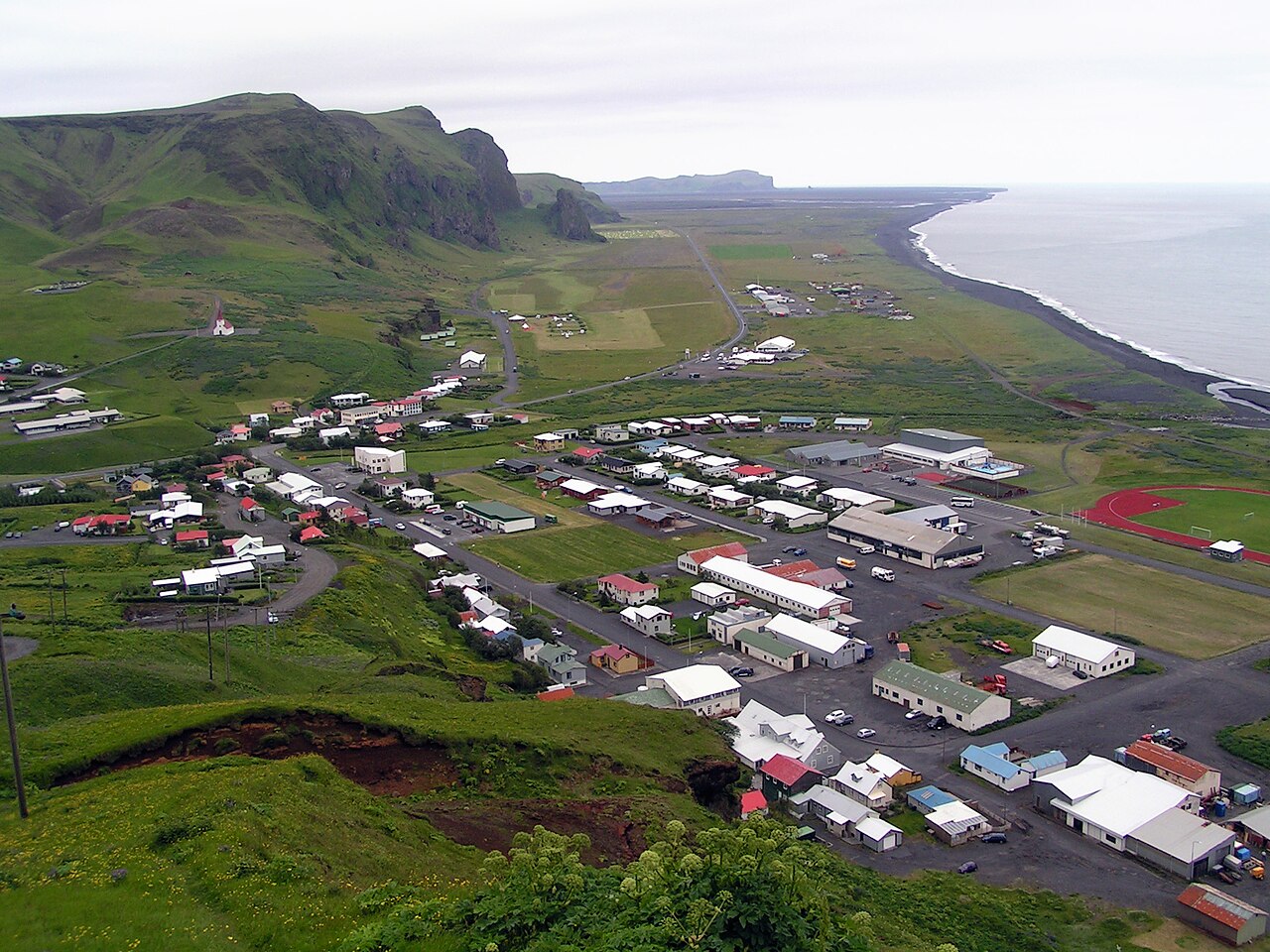
Overview
About Vík í Mýrdal
Creating a local trading place
Before trade developed at Vík, farmers in the district travelled to Eyrarbakki for supplies, journeys that could keep them away for two or three weeks. In 1883, Halldór Jónsson of Suður-Vík and Þorsteinn Jónsson of Norður-Vík arranged imports from Britain and sold goods locally. These activities helped establish a permanent commercial settlement. The village grew from farms and trading premises; by 1905 it had around eighty inhabitants in thirteen households.
A building that crossed the sea
Brydebúð illustrates how early Icelandic trading buildings could be dismantled and moved. Originally built in Vestmannaeyjar in 1831, the timber structure was taken apart, transported to Vík and re-erected in 1895. The coast continued to influence the town's economy: the vessel Skaftfellingur carried passengers and freight along the south coast into the mid-twentieth century. Vík's surviving commercial heritage records the effort required to maintain a trading centre on this harbourless shore.
Article reviewed .