Overview
About Solheimajokull
Ice supplied from higher ground
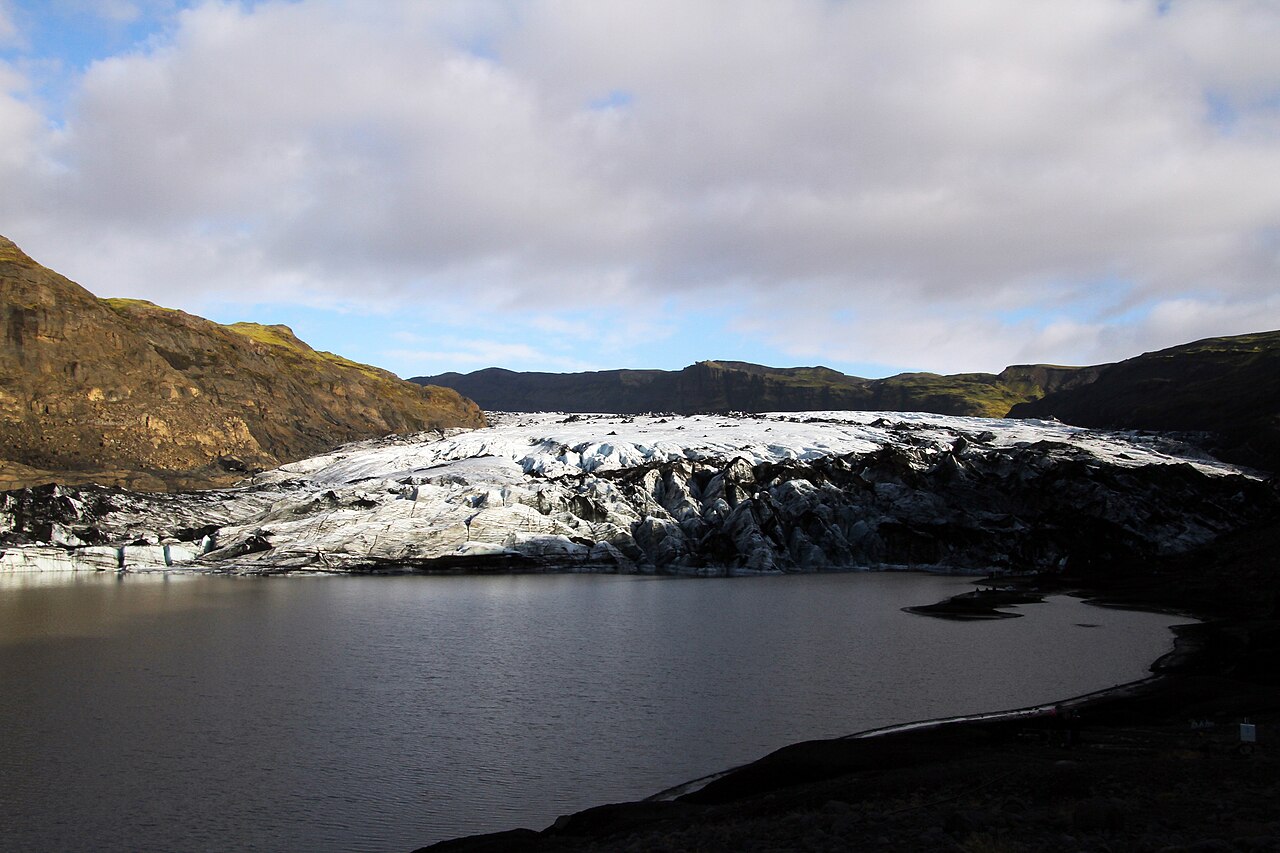
Snow accumulates on the higher ice cap, while much of the lower glacier lies in an ablation zone where melting exceeds local snowfall. The lower tongue persists because ice flows downhill from the accumulation area. Crevasses form where brittle surface ice is stretched as the glacier moves over uneven ground or along valley sides.
A measured history of change
Regular measurements of the glacier front began in 1930. The geopark records retreat between 1930 and 1969, followed by an advance lasting until 1995. Renewed retreat began in 1996. This sequence demonstrates that glacier history includes advances as well as retreat.
Ash, rock debris and melting
The glacier carries rock fragments and volcanic ash on, within and beneath its ice. Debris accumulates into dark surface layers and moraines. A thin covering can accelerate melting, whereas a sufficiently thick layer insulates the ice. The colour and texture of the surface therefore influence the glacier's response to its environment.
Article reviewed .