Overview
About Raudasandur
Sand made from shells
Fragments of Iceland scallop shells contribute the beach's characteristic reddish tint. Waves grind shells on the offshore shallows, and shell-eating fish also help break them into smaller pieces. The resulting grains accumulate along the coast. This process links the appearance of the beach to marine animals living elsewhere in the bay.
A shoreline after the Ice Age
When glaciers withdrew from the region, relative sea level stood higher and the surrounding mountains met the sea. Wave-worn stones above the modern shoreline preserve evidence of those conditions. As the land rose, shallow coastal areas developed and gradually received shell sand. The present beach therefore records both changing sea level and continuing sediment accumulation.
Currents and changing colours
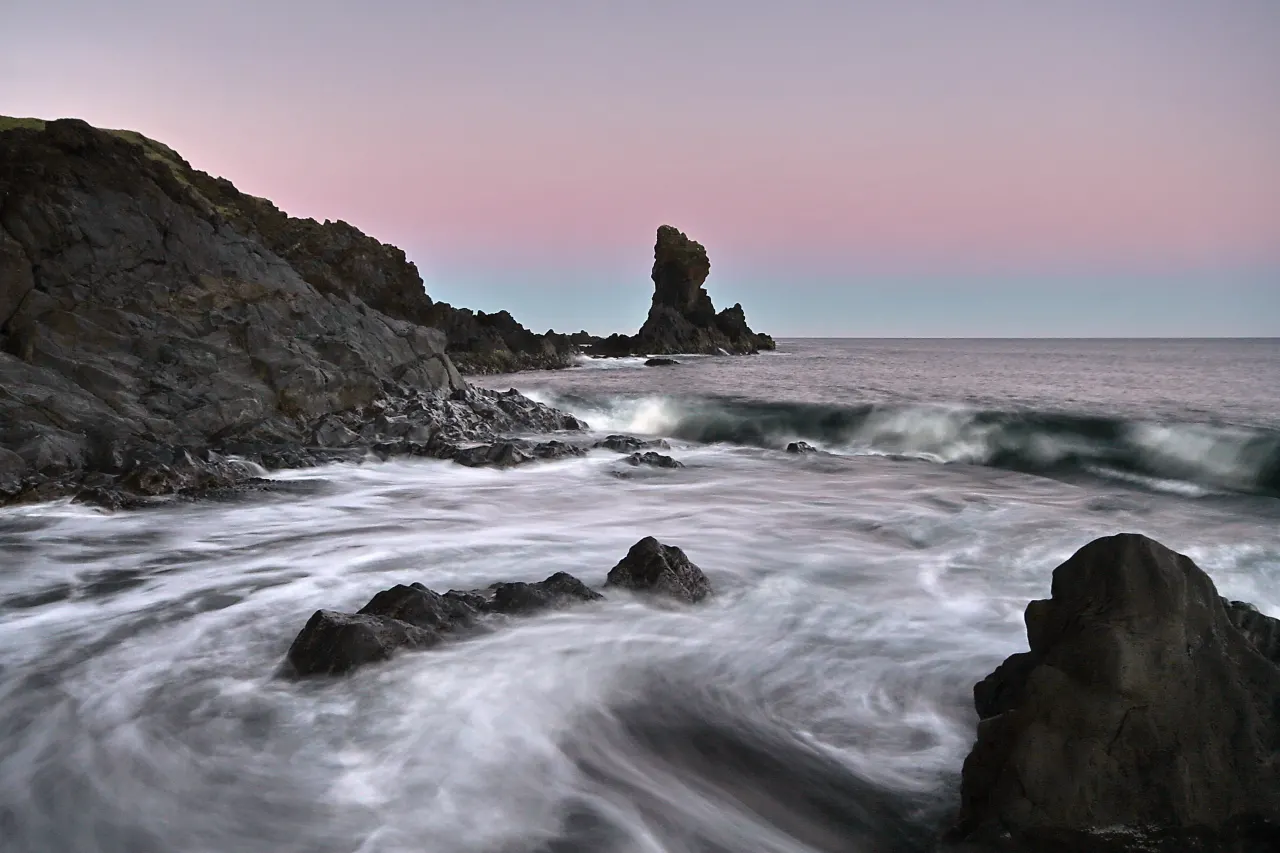
Models of circulation in Breiðafjörður help explain how shell material reaches Rauðasandur from scallop grounds farther south. Currents carry sediment along the bay's northern coast toward Látrabjarg. The sand's visible hues also change with daylight and weather, while seabirds and seals form part of the living coastal environment.
Article reviewed .