Overview
About National Theatre of Iceland
A long-awaited national stage
Guðjón Samúelsson prepared the design during the 1920s, and construction began in 1929. Delays stretched the project over two decades before the theatre opened on the first day of summer in 1950. The opening production was Indriði Einarsson's Nýársnóttin. A particularly practical detail survives beneath the spectacle: the revolving stage was built using iron from the old Ölfusá bridge, which had been rebuilt in 1944. The building thus incorporated earlier engineering into new theatrical machinery.
An imagined palace within the rocks
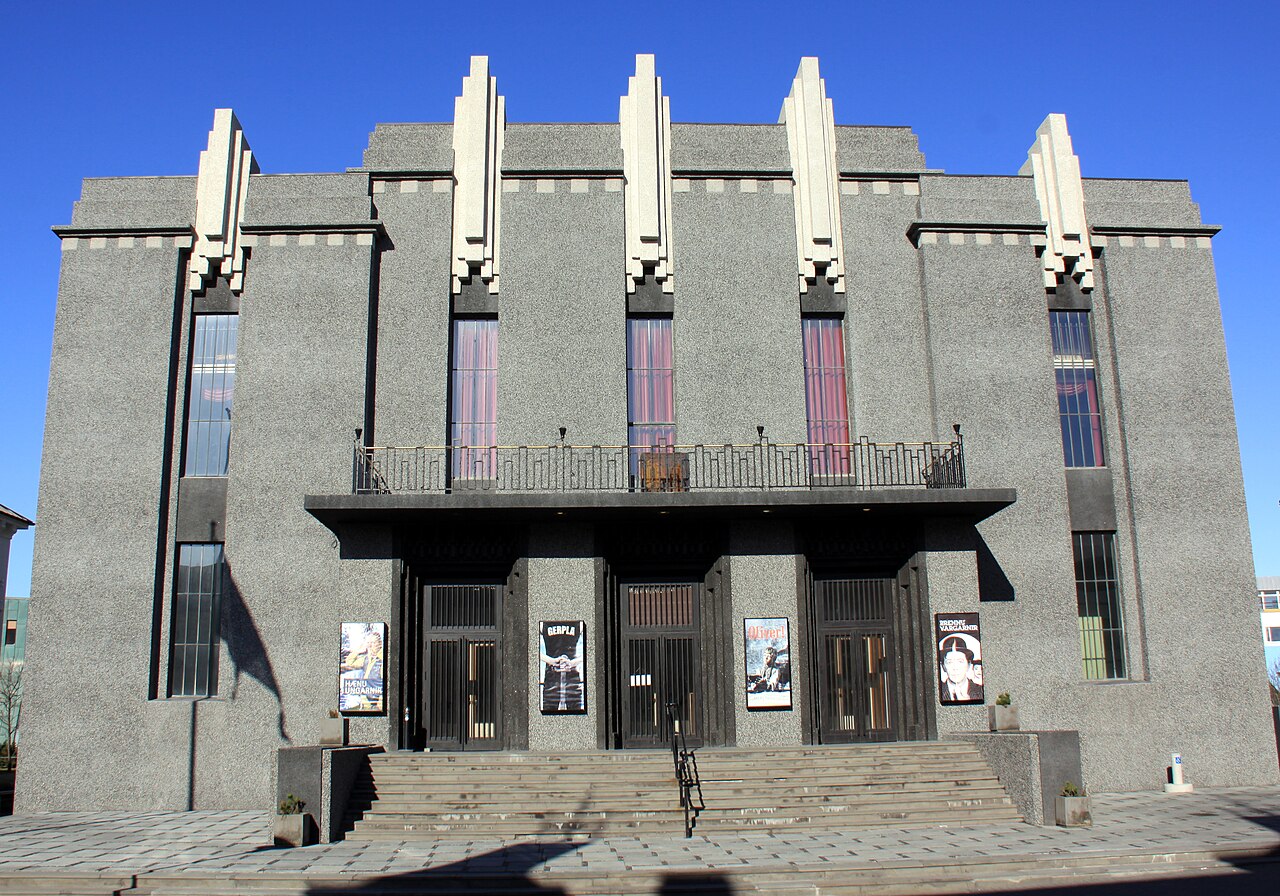
The theatre explains its design through folktales in which people enter the hidden people's palaces inside rocks and encounter music, dancing and light. Basalt-column forms inspired the main auditorium's ceiling. Outside, a coating of crushed obsidian, quartz and Iceland spar gives the concrete a distinctive surface. That material treatment helped establish steining, the application of crushed stone to buildings, in Icelandic architecture. The theatre's visual identity therefore extends from its dramatic interior to the mineral character of its exterior.
Article reviewed .