Overview
About National Gallery of Iceland
A collection founded abroad
Björn Bjarnarson founded the gallery in Copenhagen in October 1884. Works were displayed in Alþingishúsið from 1885 until 1950, when the collection moved to premises shared with the National Museum on Suðurgata. The gallery's institutional history included a period as a department of the National Museum; full legal independence followed in 1961. These changing arrangements show how a collection established through individual initiative became a distinct public art institution.
An icehouse becomes a gallery
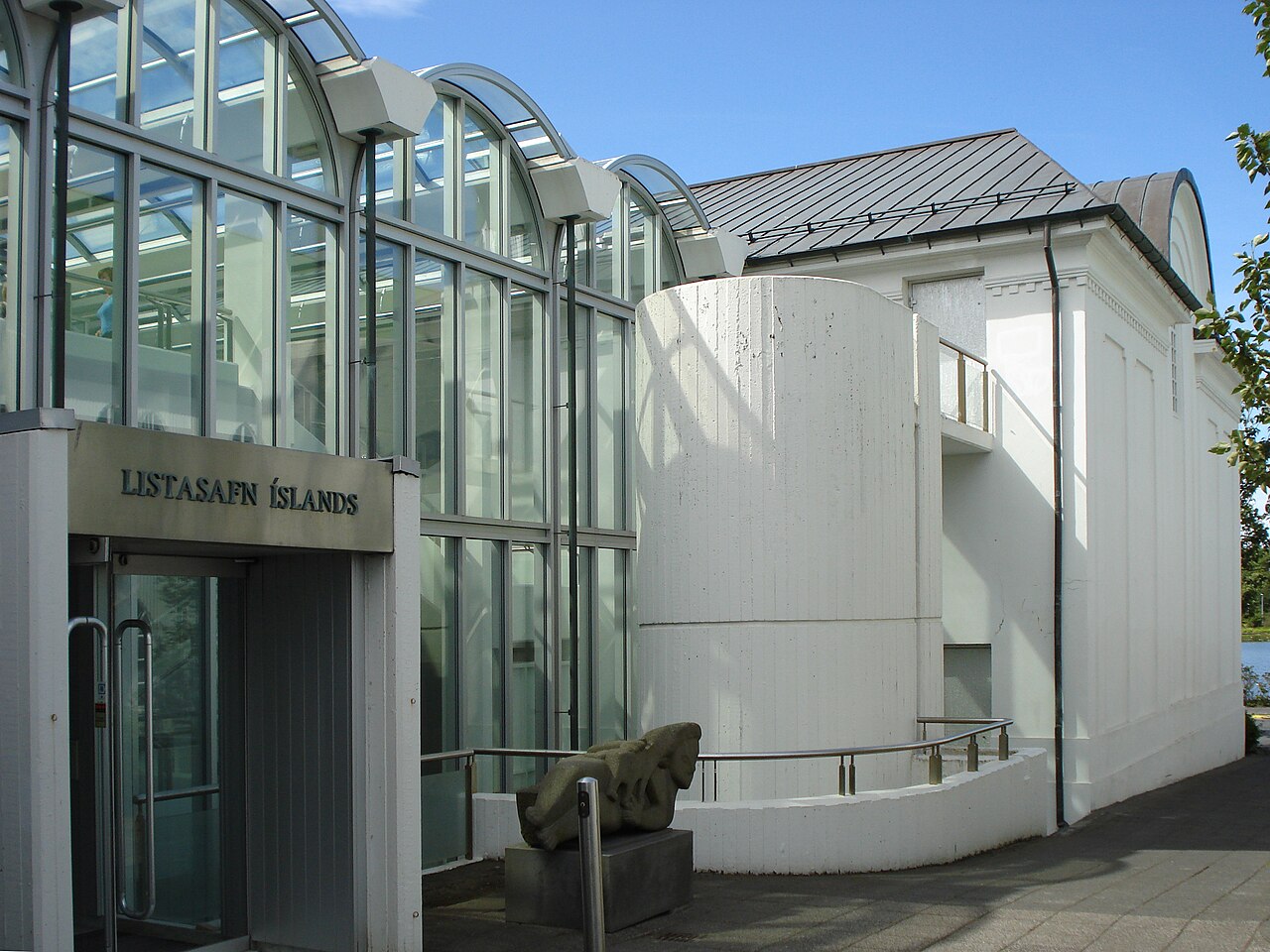
In 1987 the museum moved to Fríkirkjuvegur 7 beside Tjörnin. The older building had been designed by Guðjón Samúelsson in 1916 as an icehouse; Garðar Halldórsson designed the new extension. Exhibition halls occupy two floors. Displays drawn from the collection alternate with exhibitions devoted to Icelandic and international artists. The building's reuse places the history of food storage and urban infrastructure behind a familiar setting for Icelandic art.
Article reviewed .