Overview
About Icelandic Knitting and the Lopapeysa
Wool and construction
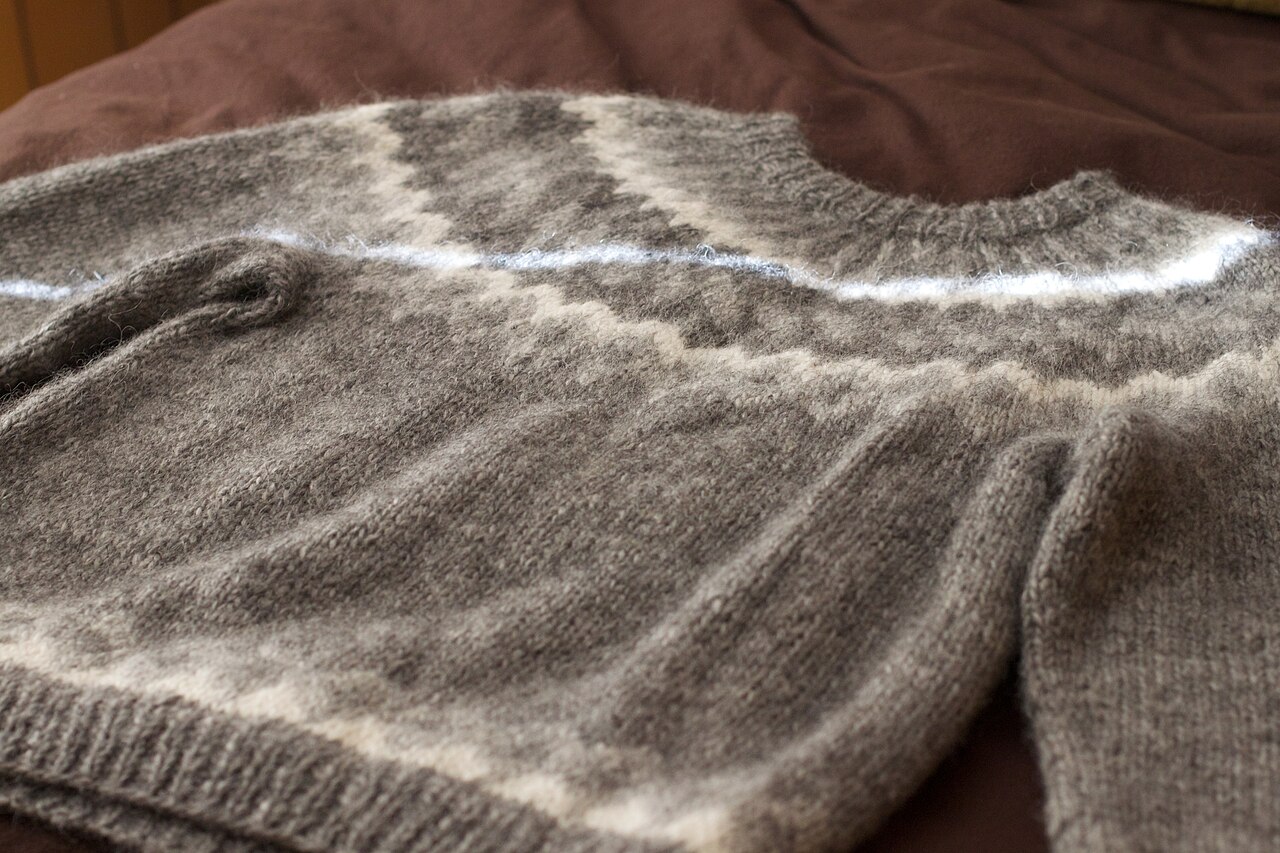
Icelandic sheep produce a fleece combining a soft inner layer, þel, with longer, coarser outer fibres called tog. The wool can be prepared as lopi, an unspun strand used directly for knitting. In the classic sweater, the body and sleeves meet in a circular yoke decorated with contrasting colours. Smaller pattern bands often appear at the hem and cuffs. Natural sheep colours are strongly associated with this classic form, although the broader tradition also includes changing colours and designs.
A developing national symbol
A joint museum research project traces the sweater through surviving garments, photographs, patterns and personal accounts. It places its emergence within a wider history of mechanised wool preparation and skilled domestic work, with influences arriving from abroad as well as developing in Iceland. The evidence describes contributions from many knitters and designers rather than one inventor. The lopapeysa consequently represents a recent tradition that has acquired a prominent place in Icelandic cultural identity.
Article reviewed .